
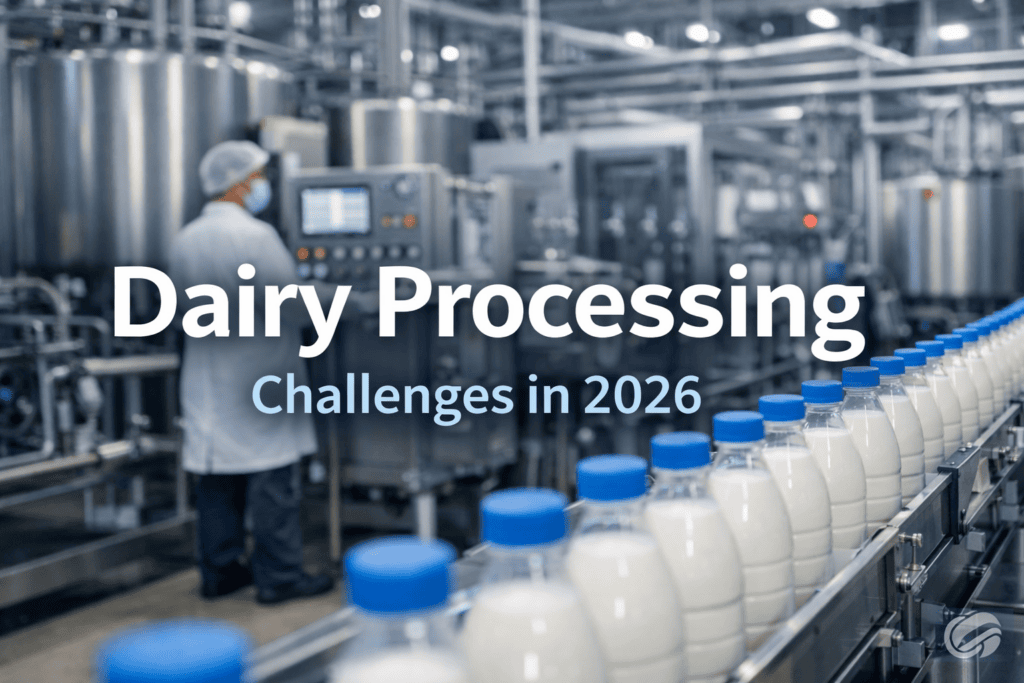
The dairy industry continues to evolve rapidly, and 2026 presents both new opportunities and growing challenges for processors. Rising consumer expectations, tighter food safety regulations, fluctuating raw milk quality, and increasing production costs mean that dairy processors must be more precise, informed, and proactive than ever before.
In this article, we explore the most common dairy processing challenges in 2026 and provide practical, science-based solutions that help processors maintain quality, consistency, and profitability.
1. Raw Milk Quality Inconsistency
The Challenge
Raw milk quality remains one of the most critical and unpredictable factors in dairy processing. Seasonal changes, feed variations, animal health issues, and handling practices all influence milk composition. Inconsistent milk quality often results in:
- Variable fat and protein levels.
- Antibiotic residues.
- High microbial load.
- Reduced product yield and shelf life.
These issues directly affect fermentation, texture development, and overall product stability.
The Solution
Processors are increasingly shifting from reactive to preventive quality control. Key practices include:
- Routine testing for antibiotic residues and adulteration at milk reception.
- Monitoring pH and acidity to assess freshness.
- Establishing clear milk acceptance standards for suppliers.
Consistent raw milk testing allows processors to detect problems early and prevent costly batch failures.
2. Texture and Viscosity Problems in Dairy Products
The Challenge
Texture defects are among the most common complaints in yoghurt, fermented milk, desserts, and dairy beverages. These include:
- Thin or weak body.
- Whey separation (syneresis).
- Grainy or unstable mouthfeel.
Such defects are often caused by processing stress, incorrect stabilizer selection, or improper hydration and dosing.
The Solution
Achieving consistent texture requires selecting ingredients that match both the product type and processing conditions. Effective solutions include:
- Using appropriate stabilizers and modified starches designed for heat, shear, and acidic environments.
- Adjusting formulations based on whether the product is set, stirred, or drinkable.
- Ensuring correct hydration temperatures and mixing times.
Proper formulation significantly improves creaminess, stability, and visual appeal while reducing rework and waste.
3. Fermentation Control Issues
The Challenge
Fermentation is a delicate biological process, and even small deviations can lead to:
- Slow or incomplete acid development.
- Over-acidification.
- Off-flavors and inconsistent taste.
These issues often arise from temperature fluctuations, poor culture handling, or unsuitable culture selection.
The Solution
Improved fermentation control starts with:
- Selecting cultures that suit the specific dairy product and processing conditions.
- Maintaining precise incubation temperatures and times.
- Monitoring pH throughout fermentation rather than relying on time alone.
With proper culture management and process control, processors achieve consistent flavor, texture, and acidity from batch to batch.
4. Shelf Life and Spoilage Challenges
The Challenge
Shelf life expectations continue to rise, yet spoilage caused by yeast, molds, and unwanted bacteria remains a major concern. Early spoilage leads to product returns, brand damage, and financial losses.
The Solution
Extending shelf life requires a multi-layered approach:
- Strengthening hygiene and sanitation programs.
- Using bio-protective cultures or approved preservatives where appropriate.
- Maintaining strict cold chain control during storage and distribution.
When combined, these measures significantly slow microbial growth without compromising product quality or clean-label goals.
5. Color, Flavor, and Consumer Acceptance
The Challenge
Consumers judge dairy products visually before tasting them. Inconsistent color, fading during storage, or unbalanced flavors can negatively impact perception—even when the product is technically sound.
The Solution
Successful processors focus on ingredient stability and balance:
- Selecting natural colors that withstand processing and shelf life conditions.
- Using flavors that remain stable in acidic and heat-treated systems.
- Fine-tuning dosage to ensure consistency across batches.
When color, flavor, and texture work together, products stand out on the shelf and meet consumer expectations.
6. Rising Production Costs and Product Loss
The Challenge
Energy prices, ingredient costs, and operational inefficiencies are placing pressure on dairy margins. Product loss due to reprocessing, rejection, or instability further increases costs.
The Solution
Cost control in 2026 is less about cutting corners and more about process optimization:
- Choosing functional ingredients that improve yield and reduce defects.
- Standardizing formulations and procedures.
- Investing in routine quality checks to prevent failures before they occur.
Preventive quality management consistently proves more cost-effective than corrective action.
7. Regulatory and Food Safety Pressure
The Challenge
Food safety regulations are becoming stricter, especially for processors targeting export markets. Traceability, documentation, and compliance are no longer optional.
The Solution
Processors must strengthen their quality assurance systems by:
- Implementing reliable testing and monitoring programs.
- Maintaining clear documentation and batch records.
- Training staff on food safety and hygiene best practices.
Strong compliance not only reduces risk but also builds trust with customers and regulators.
Conclusion: Turning Challenges into Competitive Advantage
The dairy processors who succeed in 2026 will be those who treat challenges as opportunities for improvement. By investing in better testing, smarter formulations, reliable cultures, and disciplined process control, processors can consistently deliver safe, high-quality products while controlling costs.
With the right technical approach and support, today’s dairy processing challenges can become tomorrow’s competitive edge.