
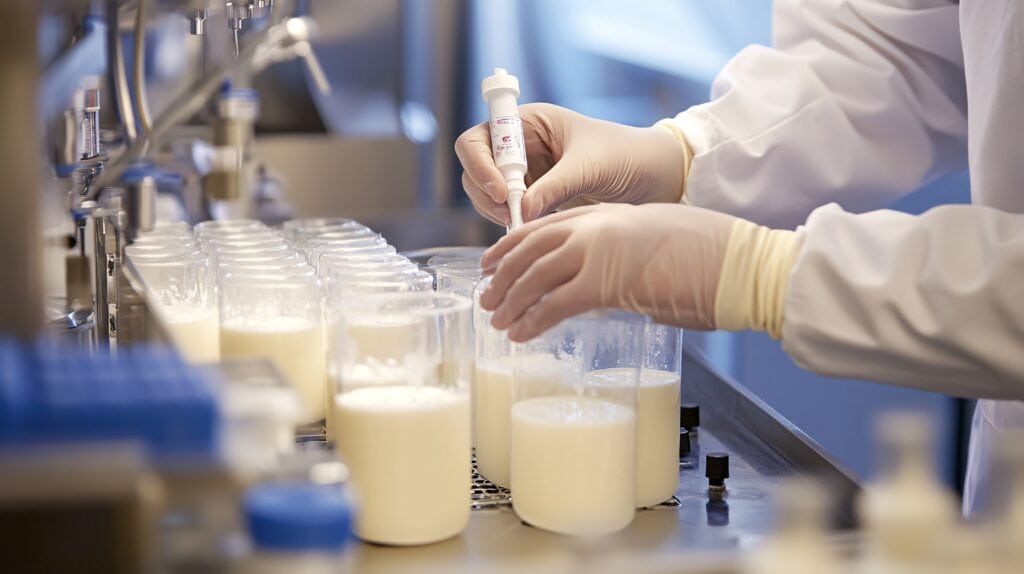
Milk is one of the most widely consumed and nutritionally important foods worldwide. From infants to adults, it plays a critical role in daily nutrition. However, the safety and quality of milk cannot be assumed. Milk adulteration and contamination remain serious challenges in the dairy industry, posing significant risks to human health and dairy processing efficiency.
Among the most concerning contaminants are antibiotic residues and aflatoxins. These substances are invisible, cannot be detected by taste or smell, and can cause serious health and processing problems even at very low levels. This makes routine milk testing for adulteration essential across the entire dairy value chain.
Understanding Milk Adulteration
Milk adulteration refers to the presence of unwanted, harmful, or unauthorized substances in milk. While some adulterants are added intentionally for economic gain, others enter milk unintentionally due to poor farm management, improper drug use, or contaminated animal feed.
High-risk adulterants include:
- Antibiotic residues
- Aflatoxin M1
- Chemical preservatives
- Excess water and contaminants
Among these, antibiotics and aflatoxins pose the greatest threat to consumer health and dairy product quality.
Antibiotic Residues in Milk
How Antibiotics Enter Milk
Antibiotics are widely used in dairy farming to treat bacterial infections such as mastitis. Contamination occurs when milk from treated cows is sold before the correct withdrawal period has elapsed. Poor record-keeping, lack of staff training, and pressure to maintain milk volumes often contribute to this problem.
Health and Processing Risks of Antibiotic Residues
Antibiotic residues in milk present both public health and processing challenges. These include:
- Development of antibiotic resistance
- Allergic reactions in sensitive consumers
- Disruption of human gut microbiota
- Inhibition of starter cultures used in yoghurt and cheese production
- Fermentation failures and reduced product yield
Because of these risks, strict maximum residue limits (MRLs) are enforced by regulatory authorities.
How to Prevent Antibiotics from Getting Into Milk
Effective control begins at farm level and continues through milk collection and processing.
✔️ Observe the Correct Withdrawal Period
After treatment, cows must be milked separately until antibiotics are fully cleared.
✔️ Keep Accurate Treatment Records
Clear documentation prevents accidental mixing of treated and untreated milk.
✔️ Train Farm Workers
Milk handlers must understand antibiotic risks and follow established protocols.
✔️ Maintain Clean Milking Equipment
Proper cleaning prevents carryover contamination from treated cows.
✔️ Test Milk Regularly
Routine screening before milk reception or processing helps detect contamination early.
Rapid Antibiotic Test Kits Available at Dairy and Food Consulting Limited
To support effective screening, Dairy and Food Consulting Limited supplies reliable rapid antibiotic test kits suitable for farms, milk collection centers, and processing plants. These solutions help ensure that contaminated milk is identified before it enters the supply chain.
3-in-1 BST Rapid Test Kit
Detects:
- Beta-Lactams
- Sulfonamides
- Tetracyclines
A versatile and widely used screening tool that supports regulatory compliance and quality control.
2-in-1 BT Rapid Test Kit
Detects:
- Beta-Lactams
- Tetracyclines
A fast, reliable, and cost-effective option ideal for routine daily screening.
Expanded Antibiotic Screening: 4-in-1 BTCC Rapid Test Kit
For more comprehensive control, Dairy and Food Consulting Limited also supplies the 4-in-1 BTCC Rapid Antibiotic Test Kit, designed to detect multiple high-risk antibiotics that directly impact milk safety and dairy processing performance.
This kit screens for the following critical antibiotic groups:
β-Lactams (Penicillins & Cephalosporins)
β-lactams are commonly used to treat mastitis in dairy cows. Even at very low concentrations, they can strongly inhibit starter cultures, leading to:
- Poor fermentation
- Weak curd formation
- Reduced yoghurt and cheese yield
They represent one of the most significant risks to dairy processing efficiency.
Tetracyclines
Tetracyclines are broad-spectrum antibiotics used to treat various cattle infections. Residues in milk can:
- Slow acid development in yoghurt
- Interfere with cheese ripening
- Cause texture and flavour inconsistencies
Ceftiofur
Ceftiofur is a third-generation cephalosporin (β-lactam). It is particularly critical to monitor due to its high potency against lactic acid bacteria. Even minimal residues can cause:
- Starter culture failure
- Complete fermentation breakdown
- Batch rejection during yoghurt and cheese production
Chloramphenicol
Chloramphenicol is a banned antibiotic in food-producing animals, with zero tolerance worldwide. Any detectable residue:
- Makes milk illegal and unsafe for processing
- Completely inhibits starter cultures
- Poses serious public health risks
Aflatoxins in Milk
What Are Aflatoxins?
Aflatoxins are toxic compounds produced by molds, mainly Aspergillus flavus and Aspergillus parasiticus. These molds thrive in warm, humid conditions and commonly contaminate feed ingredients such as maize, groundnuts, and cottonseed.
From Feed to Milk: Aflatoxin M1
The most concerning aflatoxin is Aflatoxin B1 (AFB1). When cows consume contaminated feed, AFB1 is metabolized in the liver and converted into Aflatoxin M1 (AFM1), which is excreted into milk.
Aflatoxin M1:
- Cannot be destroyed by pasteurization or boiling.
- Is toxic even at very low levels.
- Poses significant risks to infants and young children.
Aflatoxin Test Kits from Dairy and Food Consulting Limited
To manage this risk, Dairy and Food Consulting Limited supplies reliable Aflatoxin Test Kits for rapid and accurate detection in both milk and animal feed. These kits help:
- Detect Aflatoxin M1 in milk
- Detect Aflatoxin B1 in feed
- Prevent contaminated milk from reaching consumers
Importance of Routine Milk Testing
Routine milk testing:
- Protects public health.
- Ensures regulatory compliance.
- Prevents fermentation failures and product losses.
- Builds consumer trust and brand credibility.
Milk testing is not a cost—it is an investment in safety, quality, and sustainability.
Milk safety begins at the farm and continues through collection, processing, and distribution. By controlling antibiotic use, monitoring feed quality, and implementing routine testing for adulteration, dairy stakeholders can significantly reduce health and processing risks.
Testing for antibiotic residues and aflatoxins is essential to ensure milk is safe for human consumption. With the right practices and reliable testing tools, the dairy industry can consistently deliver safe, high-quality milk to the market.
Dairy and Food Consulting Limited remains committed to supporting the dairy and food industry with effective testing solutions that protect consumers, processors, and brands.